
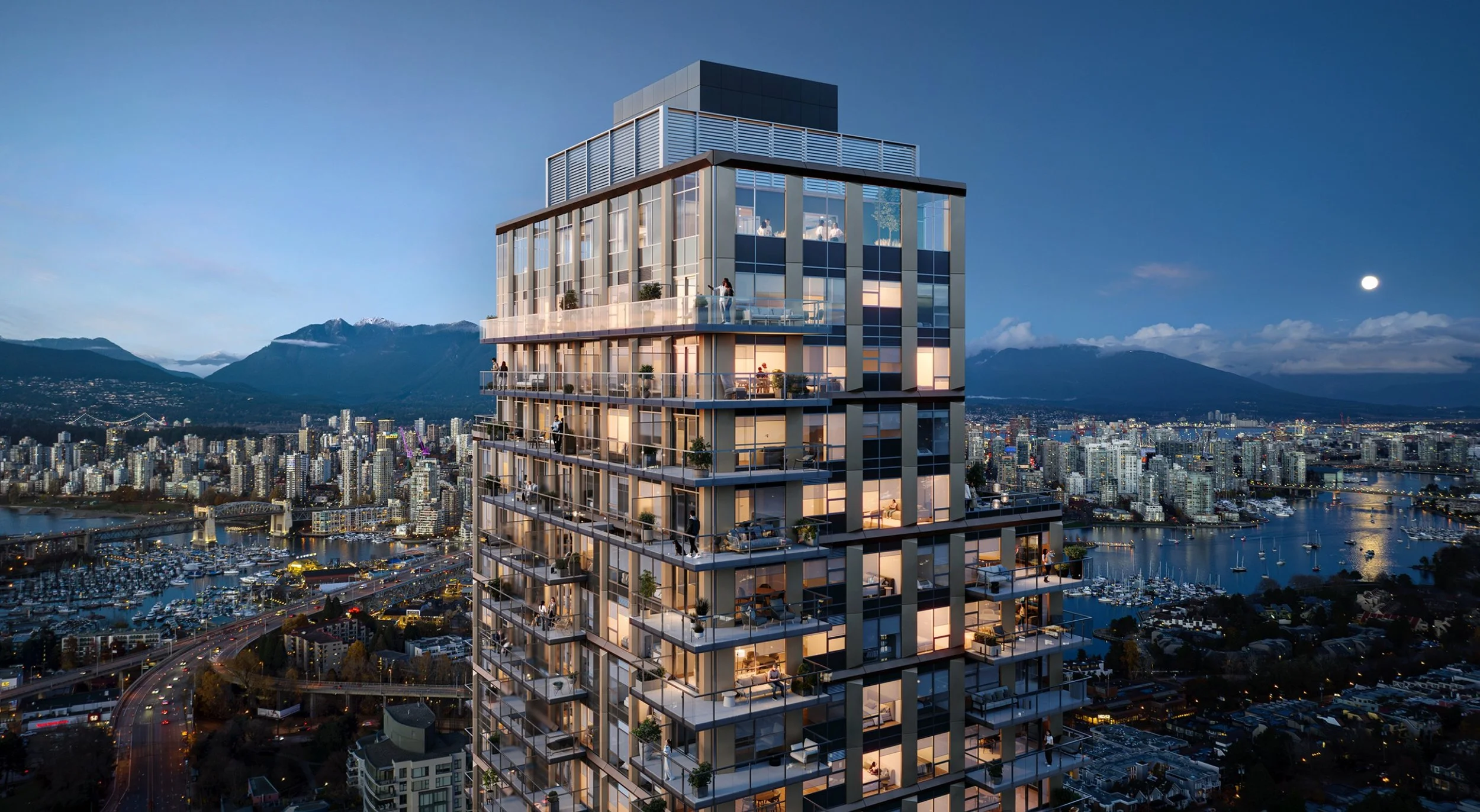
Broadway & Granville Building
space
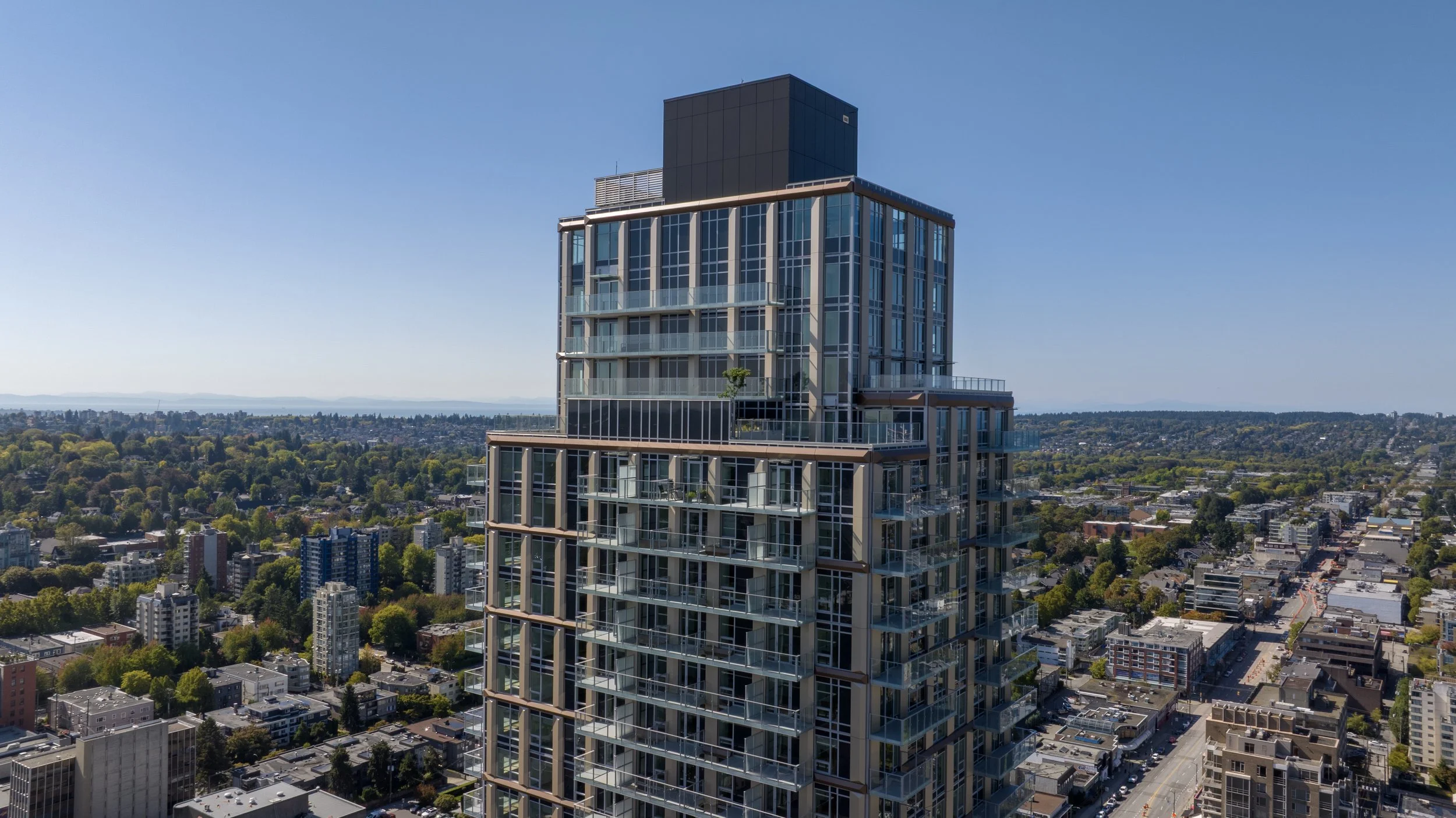
Together with PCI Developments and MCM Partnership, Edit Studios has breathed “historic life” back into this new 5 storey mixed use development; formerly the historical site of RBC’s first HQ. The new site will contain 67,200 sq. ft of office space. Constructed in 1957, the bank was designed in the International Style and was characterized by its continuous curved front façade, with alternating pattern of horizontal bands windows and spandrel panels, set between vertical black metal-clad pilasters, and its dark green granite base.


A New Chapter for South Granville
The Stories at South Granville Station sits at the centre of this transformation, bringing a new workplace environment to a neighbourhood defined by its history, creativity and evolving urban identity.
For Edit Studios, the challenge was to create an interior experience that felt distinctly contemporary while remaining connected to the site’s past. Rather than treating the development as an entirely new beginning, we looked for opportunities to carry elements of the building’s history forward, using material, architectural detailing and spatial design to create a meaningful connection between the old and the new.
Bringing History Forward Through Design
The site was once home to RBC’s former headquarters, a 1957 International Style building recognized for its sweeping curved façade, black metal detailing and dark green stone base. As the new development took shape, preserving elements of this architectural legacy became an important part of the design approach.
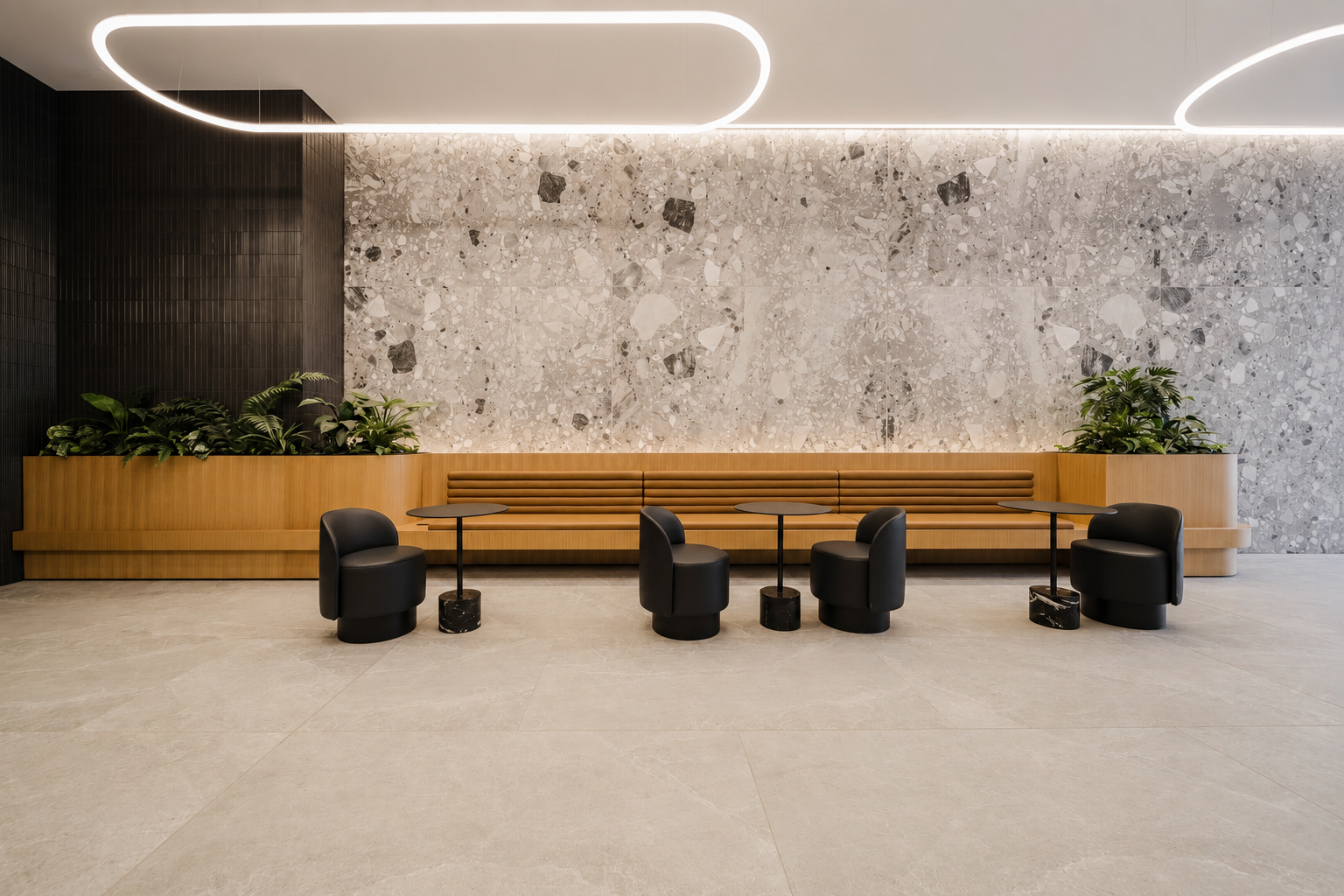
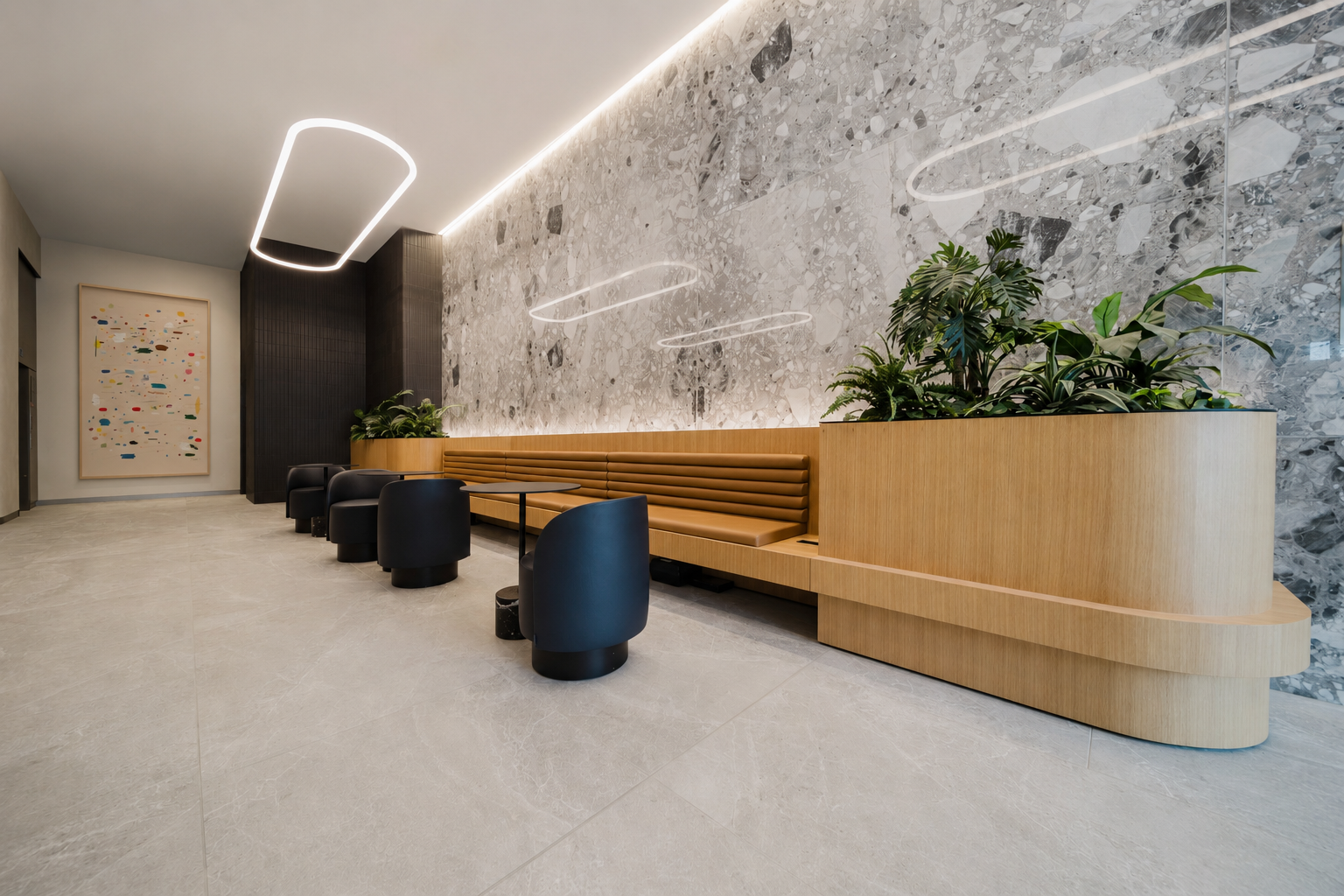
The original green stone presented both an opportunity and a challenge. After nearly 70 years, much of the material had been damaged, making it difficult to reuse in its original form. Working with a local stone mason, we found a way to give it a second life, transforming salvaged pieces into the bases of a collection of bespoke coffee tables in the lobby.
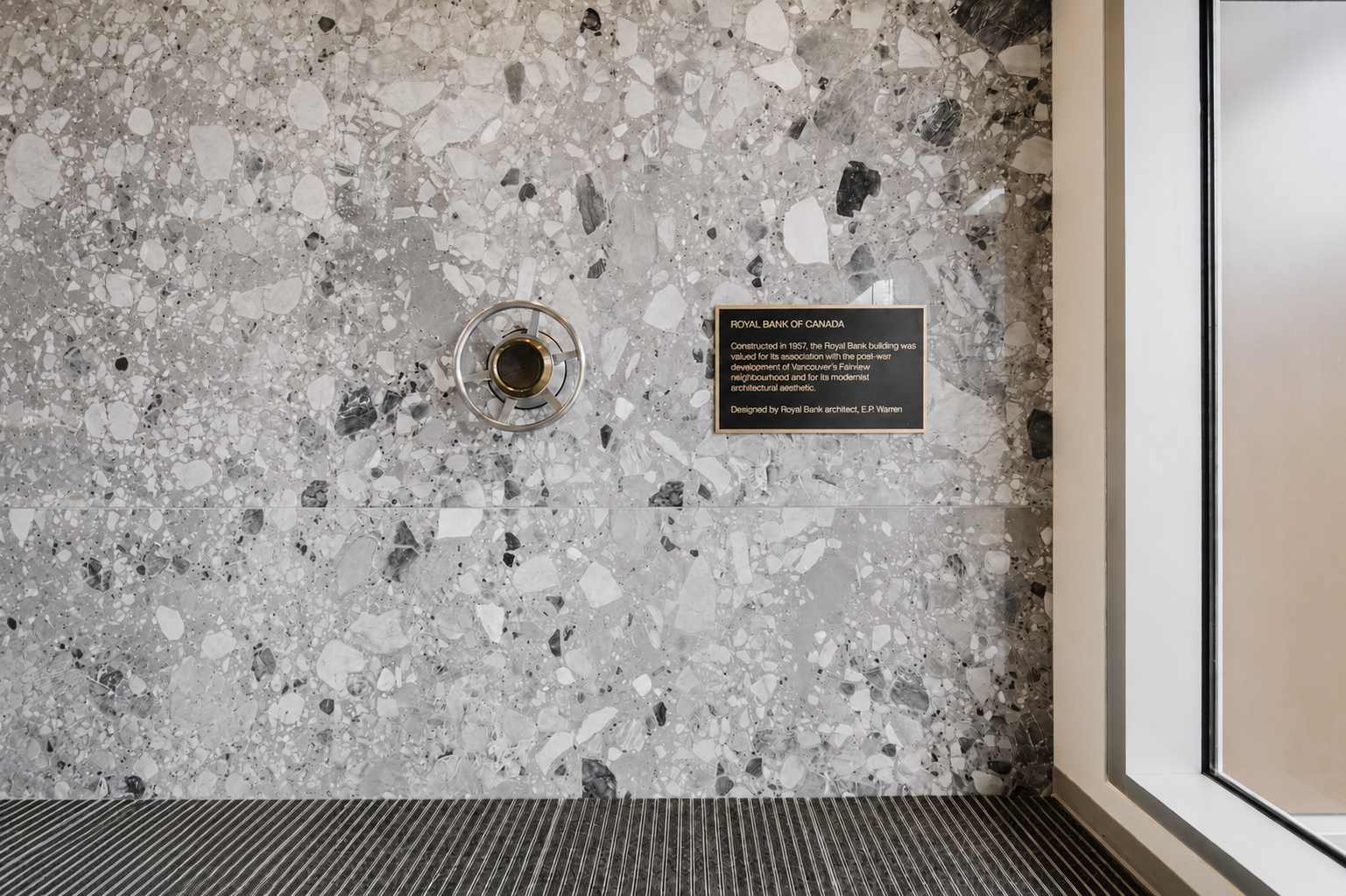
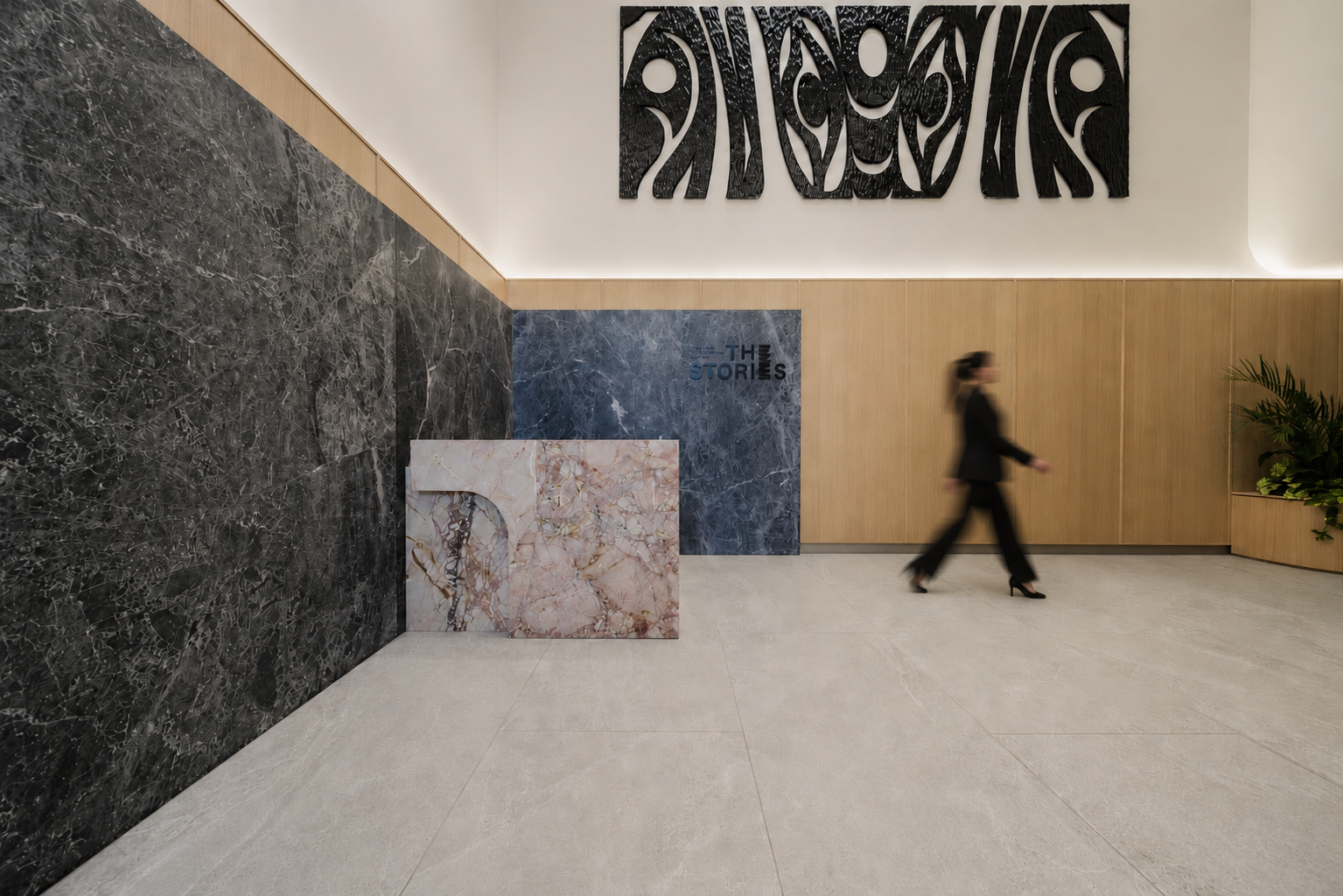
Another piece of the building’s history revealed itself in the original bank vault door. Rather than allowing this distinctive feature to disappear, we incorporated it into the lobby as a feature art piece. Its presence offers an unexpected point of connection to the site’s former life, allowing the building’s history to remain visible within its new context.
These interventions reflect a broader design intention: to preserve the character of the site wherever possible, not through direct replication, but through considered reinterpretation. By integrating existing materials and architectural artifacts into the new interior, the design creates a sense of continuity while giving these elements a new purpose.
Connecting Architecture and Interiors
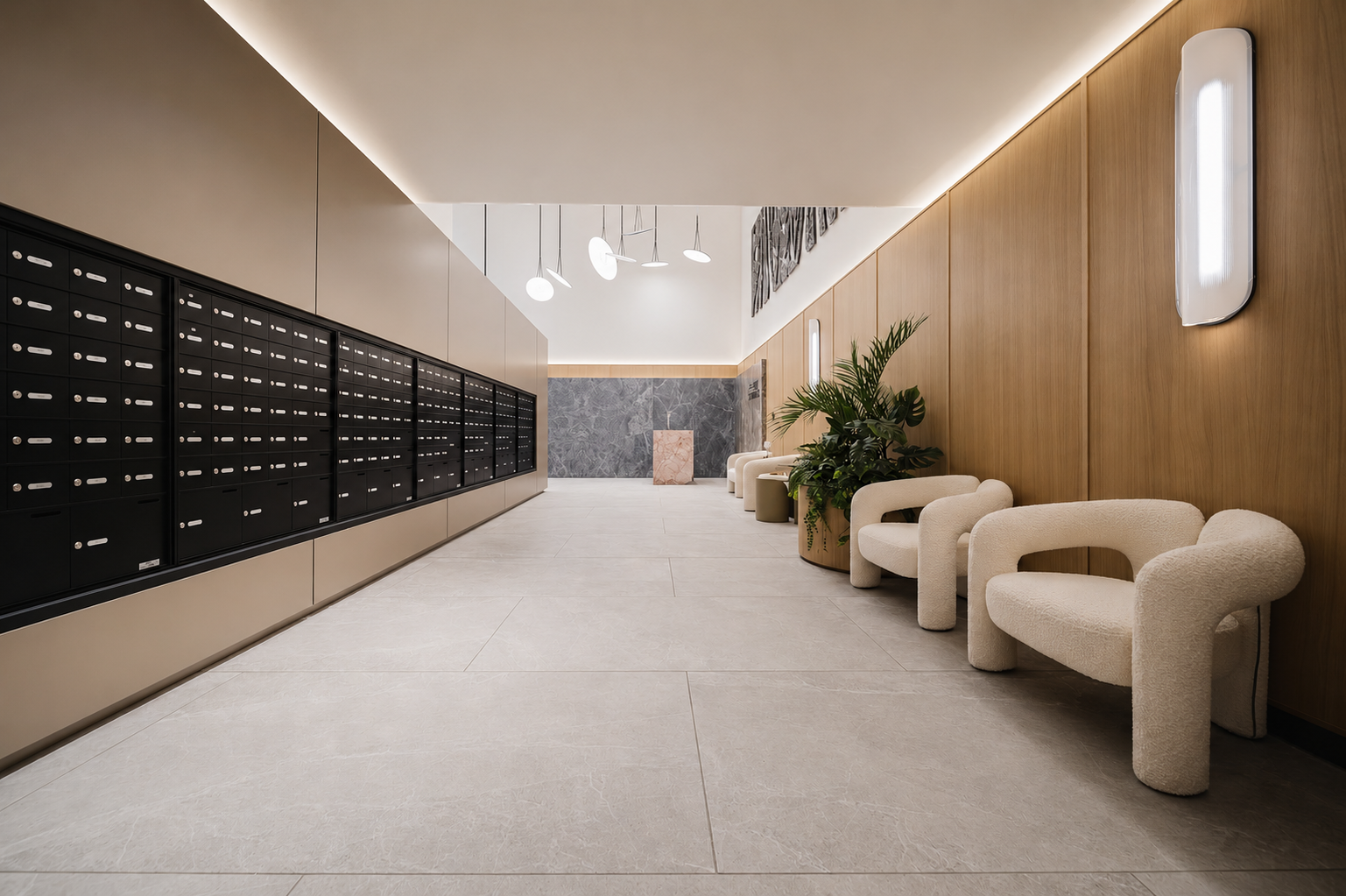
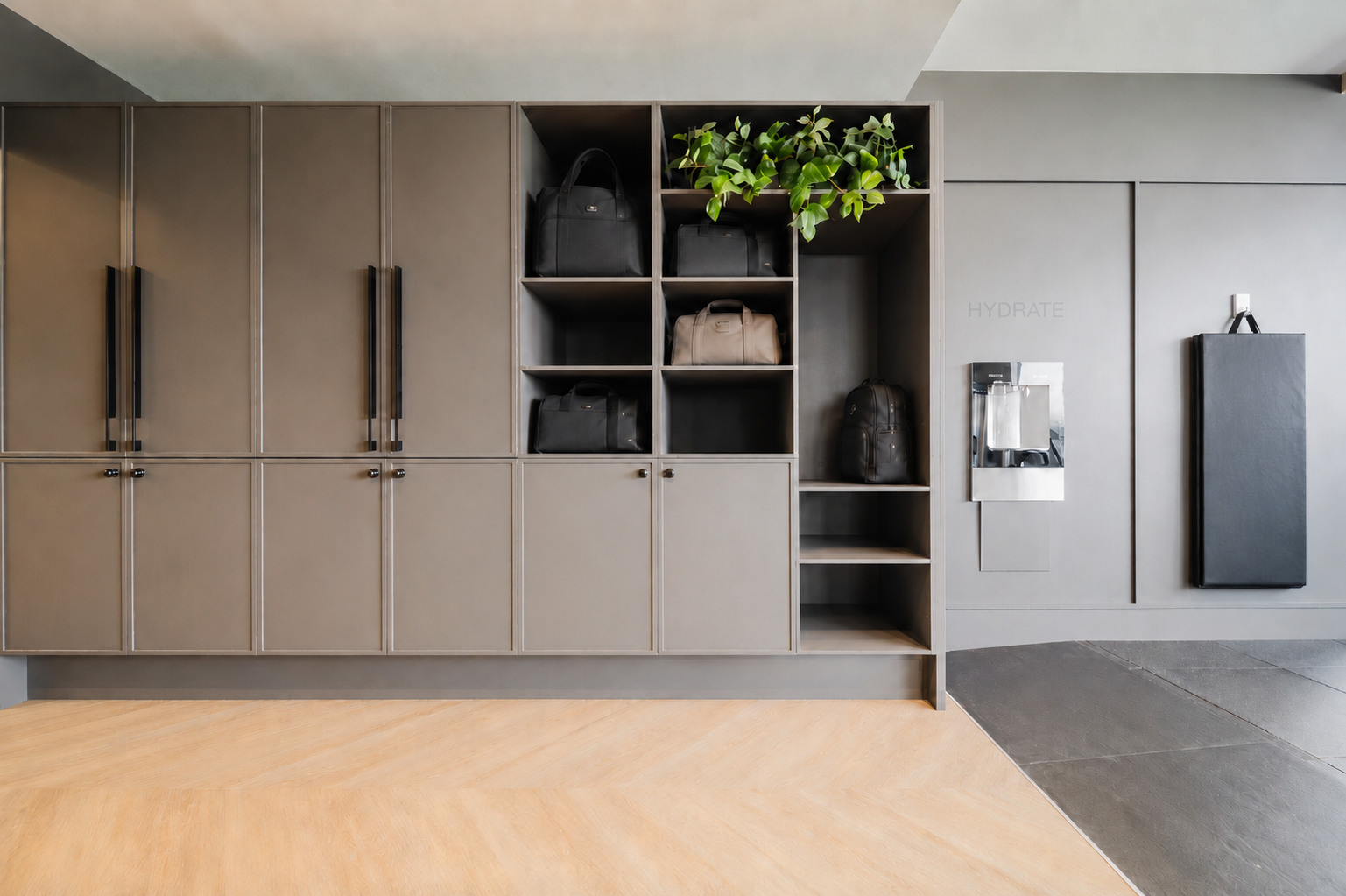
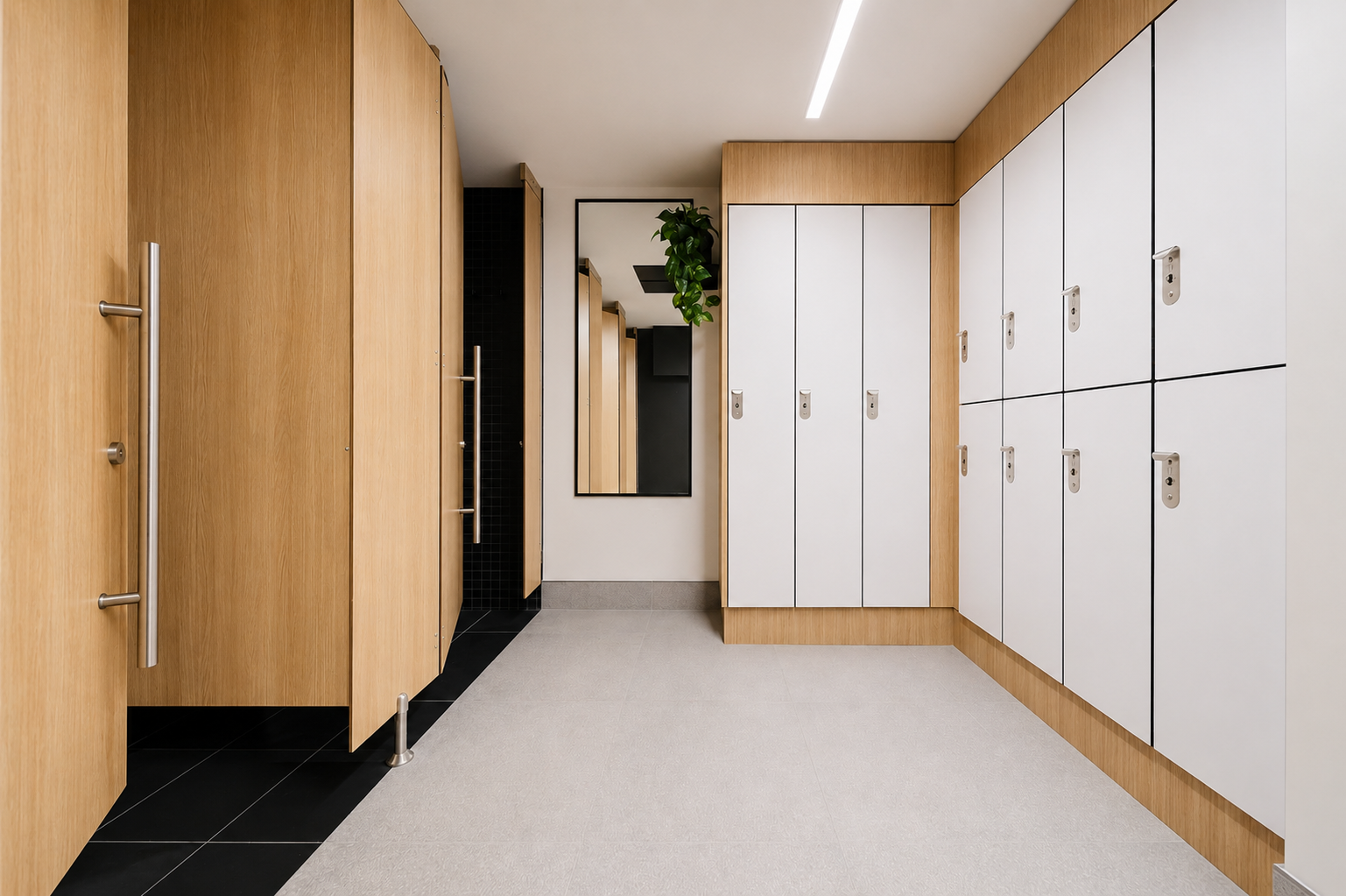
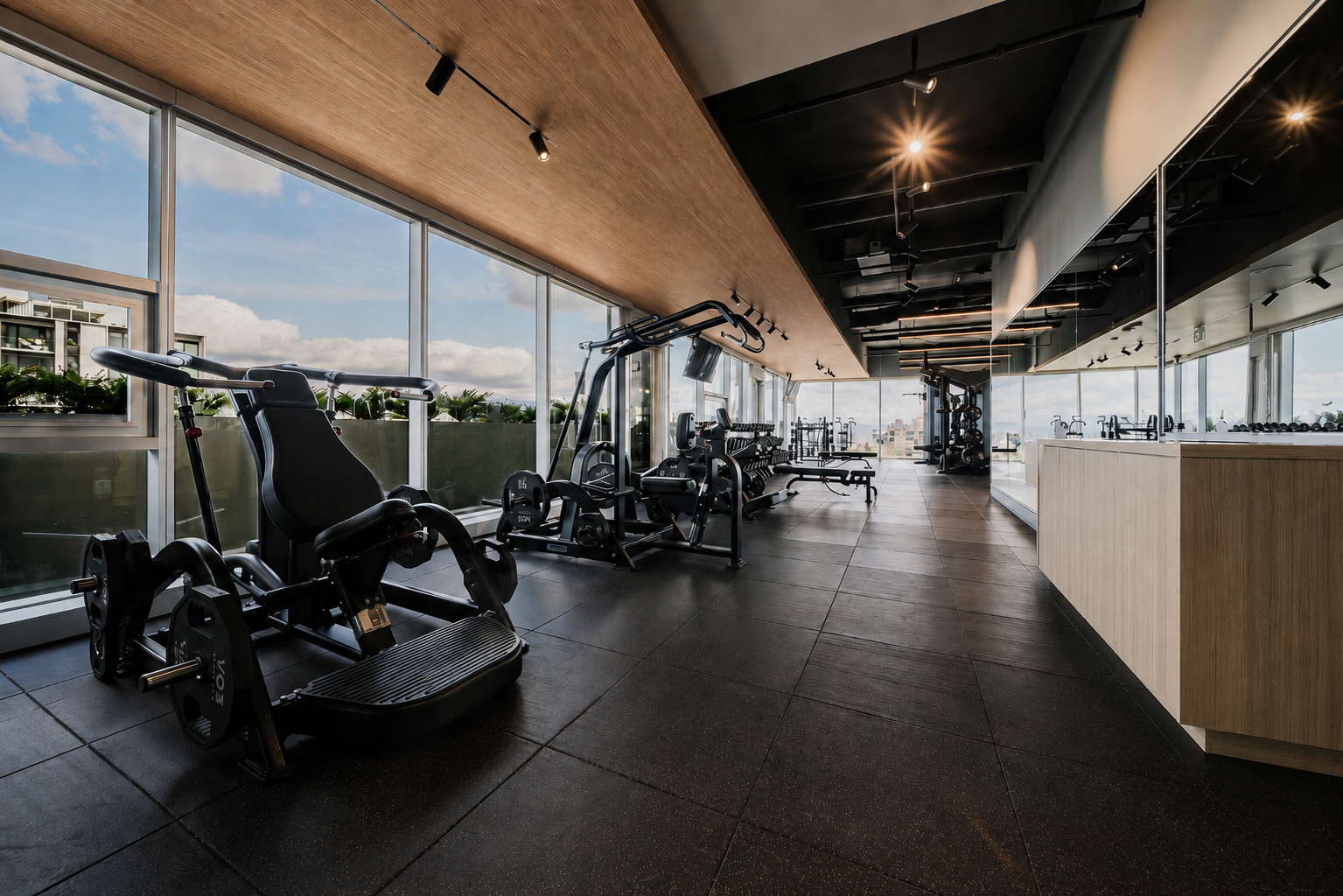
A defining feature of the project was extending the building’s architectural language into the interior environment. The distinctive metal detailing of the exterior informed elements throughout the amenity spaces, creating a consistent visual language that connects the building’s architecture with its interior design.
This continuity is balanced by dramatic natural stone, rich material palettes and refined detailing. Together, these elements establish a sense of depth and permanence while introducing warmth and sophistication to the workplace environment. The contrast between strong architectural gestures and carefully considered material selections creates spaces that feel cohesive without losing their individual character.
Every detail contributes to the relationship between the building’s exterior identity and the experience of moving through its interior. Rather than treating architecture, interiors and shared spaces as separate elements, the design brings them together as part of a unified experience.
Creating a More Human Workplace
At the centre of the experience, the lobby was conceived as more than an arrival point. Drawing on the principles of hospitality design, it was developed as a flexible social environment that supports the everyday rhythms of the workplace.
Tenants can grab a coffee, meet informally, connect with colleagues or simply pause during the day. These moments of everyday interaction informed the approach to the space, shifting the lobby from a transitional area into an active part of the building’s social life.
This hospitality-inspired approach extends the role of the workplace beyond individual offices and workstations. By creating opportunities for informal connection and shared experiences, the interior supports a stronger sense of community while offering tenants a welcoming environment throughout the day.
The result is a workplace that considers not only how people work, but also how they arrive, interact, recharge and connect with the people around them.
Designing for a Seamless Tenant Experience
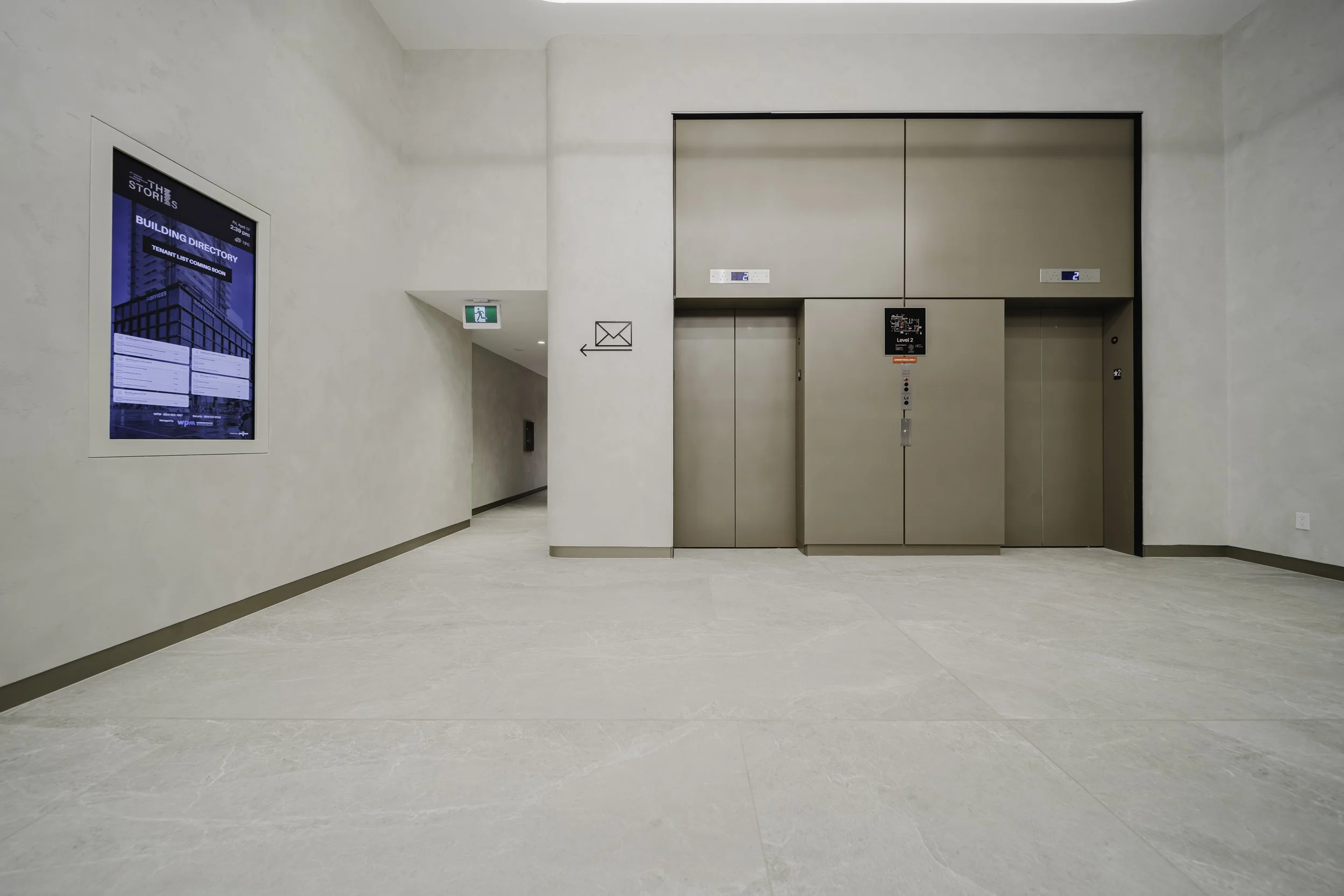
A cohesive signage and wayfinding program completes the experience, reinforcing the building’s identity while helping people navigate the environment intuitively. Integrated into the broader design language, the program supports clear movement throughout the building without competing with the architectural and interior elements.
Together, the interior spaces, material choices and wayfinding create a connected tenant journey, from the first point of arrival through the shared amenities and spaces that support everyday interaction.
The project brings together heritage, contemporary design and hospitality to create a workplace environment that feels rooted in its surroundings while responding to the expectations of a new generation of tenants.
A New Chapter, With a Past
The Stories is a new building, but it was never intended to feel as though it had appeared without a past. Through the thoughtful reuse of original materials, the preservation of significant architectural artifacts and the continuation of the building’s distinctive design language, Edit Studios has carried pieces of South Granville’s history into its next chapter.
The result is an environment that balances architectural character with everyday functionality, creating a place for work, connection and community. More than a new workplace, The Stories reflects the evolving identity of South Granville—honouring what came before while making room for the stories still to unfold.
Scope
Client
PCI Development
Agency
Edit Studios Inc.
Architect
MCM Partnership